
Postdoctoral Fellow · School of Medicine
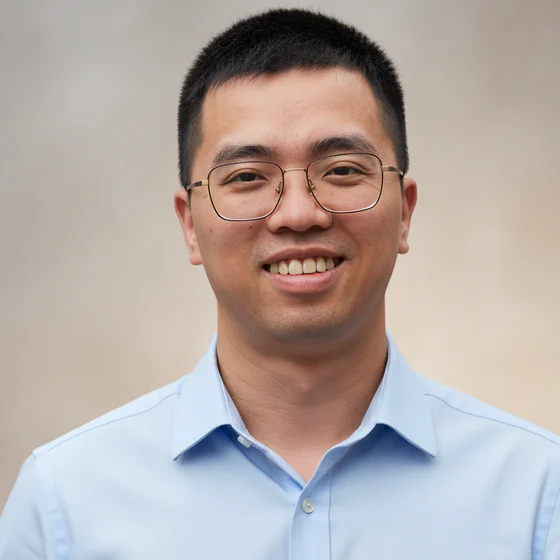
Jinxi "Derek" Xiang 项进喜
About
Jinxi “Derek” Xiang is a Postdoctoral Fellow at Stanford University School of Medicine, working with Prof. Ruijiang Li on AI for precision oncology. He earned his Ph.D. from Tsinghua University in 2021 and was previously a Senior Researcher at Tencent AI Lab, where he led computational pathology projects deployed in clinical settings.
He develops multimodal foundation models that integrate histopathology, spatial transcriptomics, proteomics, and clinical text to reveal tumor biology and predict treatment outcomes. His research combines representation learning and generative modeling to learn from multiscale and multimodal data. His goal is to translate these advances into tools for understanding tumor heterogeneity, refining cancer classification, and guiding treatment across diverse patient populations.
Research
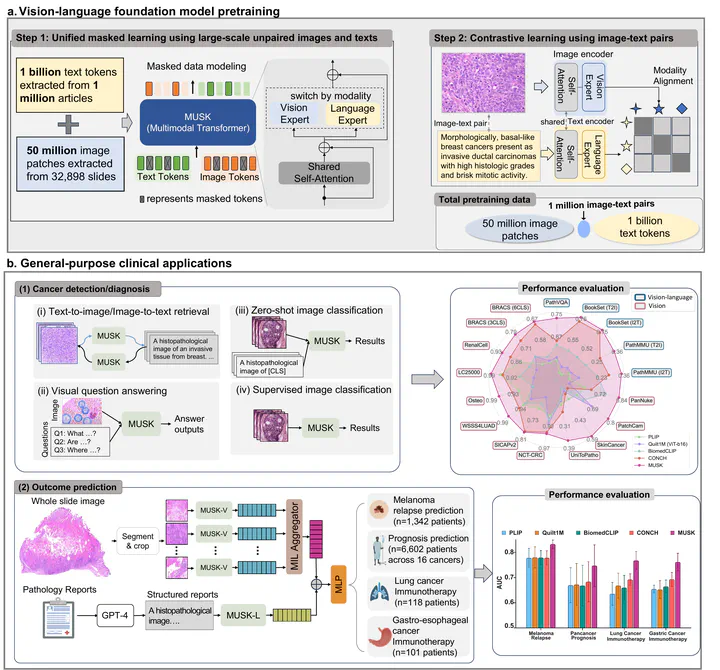
Vision–language foundation models for oncology
Clinical decisions draw on images and text together. I develop foundation models that learn jointly from pathology images and clinical language at scale, then transfer with little or no labeled data to diagnosis, prognosis, and treatment response prediction.
Virtual tissue and the tumor microenvironment
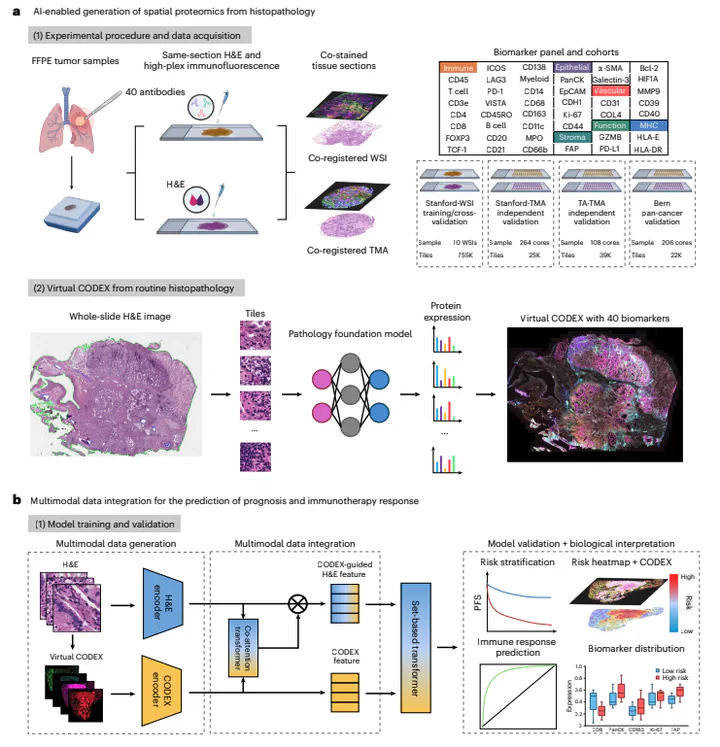
Histology, spatial transcriptomics, and proteomics are different views of the same tissue. I build models that learn them jointly, a virtual tissue that can translate between modalities, generate missing ones from routine H&E, and map the cellular and molecular architecture of the tumor microenvironment at scale.
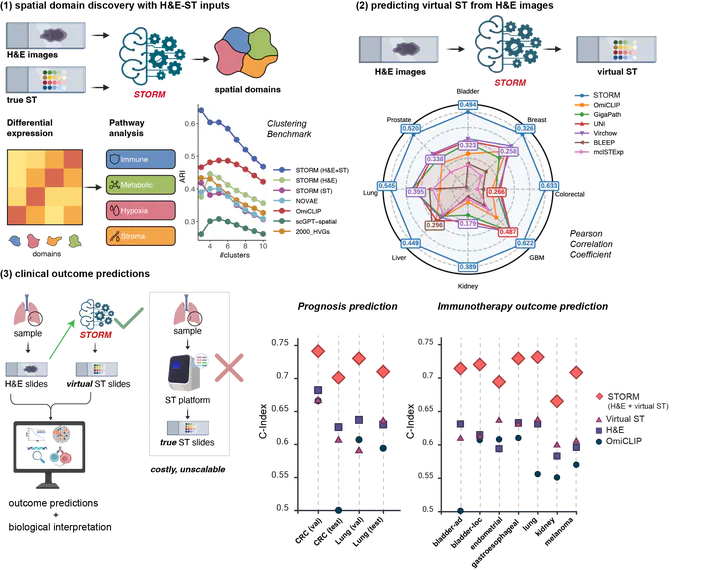
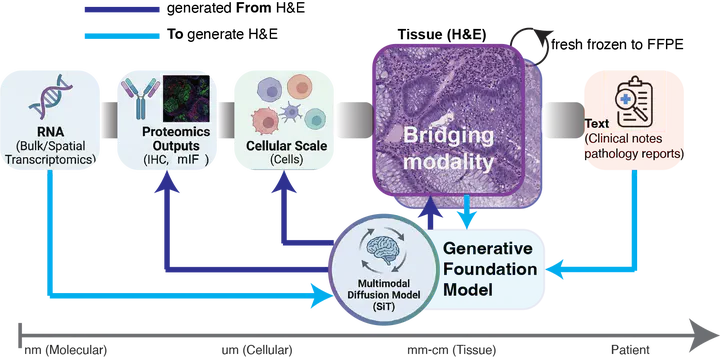
Generalizable learning from whole-slide images
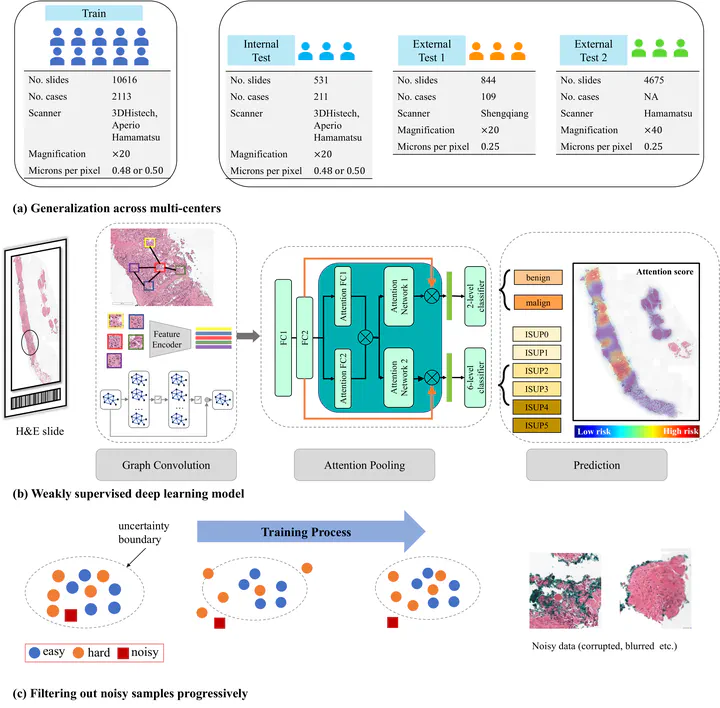
Gigapixel slides with only slide-level labels demand learning methods that are data-efficient and robust across hospitals. I design multiple instance learning frameworks that turn foundation-model features into reliable, uncertainty-aware clinical predictions.
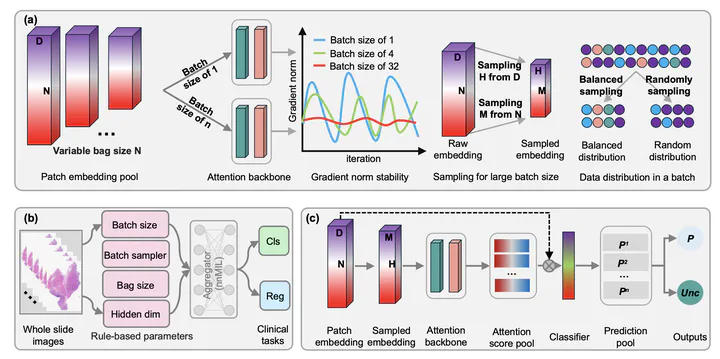
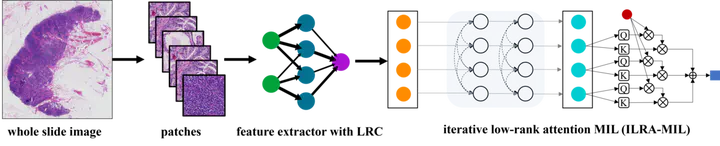
News
- Invited to serve as an Area Chair for ICML 2027.
- nnMIL: A generalizable multiple instance learning framework for computational pathology published in Nature Biomedical Engineering.
- Invited to serve as an Area Chair for ICLR 2027.
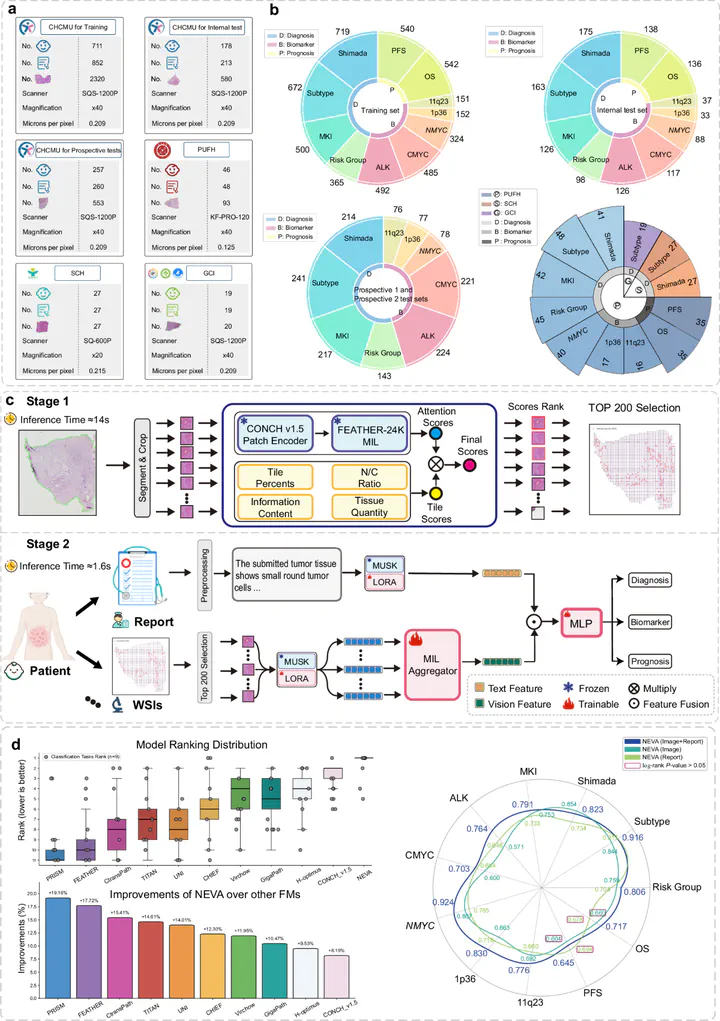
- A unified vision-language model for precision oncology and biomarker prediction in neuroblastoma (NEVA) published in Nature Communications.
- Invited talk at MD Anderson Cancer Center: Multimodal Foundation Models for Precision Oncology. Hosted by Dr. Han Liang, Department of Bioinformatics and Computational Biology.
- Invited talk at Houston Methodist: Integrating Pathology and Spatial Omics for Precision Immunotherapy. Hosted by Dr. Keith Chen, Department of Urology.
- Recognized as a Gold Reviewer for ICML 2026.
- AI-enabled virtual spatial proteomics from histopathology for interpretable biomarker discovery in lung cancer (HEX) published in Nature Medicine.
- Received the IEEE Transactions on Medical Imaging Reviewer Certificate of Excellence 2025.
- Invited to serve as an Area Chair for ICLR 2026.
- Nature Cancer highlighted foundation models such as MUSK as substantial progress in digital pathology.
- MUSK featured by Stanford Medicine, Stanford Report, Stanford HAI, NVIDIA, The Stanford Daily, BioArt, and AdvanceBC.
- A vision–language foundation model for precision oncology (MUSK) published in Nature.
Experience
Positions

Stanford University
Postdoctoral Fellow
– Present · 2 yrs 10 mos
Medical AI for precision oncology, with Prof. Ruijiang Li

Tencent AI Lab
Senior Researcher
– · 2 yrs 7 mos
Computational pathology, image/video coding, video generation

SenseTime
Research Intern
– · 5 mos
Medical image analysis
Education

Tsinghua University
Ph.D. in Engineering
–
Machine learning; computational imaging

The University of Edinburgh
Visiting Ph.D. Student
–
Electrical and Electronics Engineering

University College Dublin
Exchange Student
–
Electrical and Electronics Engineering
Wuhan University
B.E. in Engineering
–